Growing without a commercial director: what AI changed
 By
By
If growth has flattened and you're weighing a senior commercial hire against an agency, AI has changed one part of that decision and left the rest where it was.
It changed what the work costs to do. It didn't change who can tell whether the work is any good.
The part most owners are hoping to automate was never the part holding them back.
The argument in the room
The conversation usually starts somewhere else. Sales were fine last year and they're not this year. Or they're fine but nobody can say why, which is the same problem wearing better clothes. Someone suggests a commercial director. Someone else says the marketing manager should be picking more of it up. A third says give it to an agency. And then, this being 2026, somebody asks whether AI can do most of it now anyway.
It's a fair question.
Yes, a lot of the work can be done with AI now. Research that used to take a week takes an afternoon. Drafting, list building, first-pass analysis, the reporting nobody enjoyed: all faster, all cheaper, and genuinely so. Anyone telling you otherwise hasn't really used the tools.
But the work was rarely the constraint. Knowing which work to do was the constraint, and that hasn't moved.
What AI moved, and didn't
The tool gives you half a dozen decent suggestions in half a minute. What it can't tell you is which one is right for your market, your margin and this quarter. That was always the expensive part, and it still is.
I got this wrong myself, out loud, for a couple of years. I used to tell people AI amplifies ability, that it makes sharp people sharper and leaves the rest standing. When I finally went and checked, a controlled study of more than 5,000 workers ran the other way: the biggest gains went to the least experienced people, on the most routine work. And none of them show it supplying the thing that matters here, which is the judgement to tell a right answer from a confident wrong one.
So there's a simpler test than anything in the research. If you find yourself asking it what to say, you're not the specialist yet. The people getting real value are the ones who already knew roughly what the answer should look like, and could tell when they weren't getting it.
The question isn't whether AI can do commercial work. It's whether anyone in your building can tell whether the work it does is right. Buy the speed without the judgement and you've automated the production of plausible mistakes.
Why this job is awkward
Most of what a commercial lead does looks automatable from the outside. Reporting, forecasting, market analysis, campaign oversight. Plenty of it now is.
But the core of the job was never the paperwork. The core is knowing which of the eight people on a call actually decides, and it isn't the one doing most of the talking. It's the relationship built over four years that means a prospect tells you the real problem on the third meeting rather than the polite version on the first. It's the judgement to walk away from revenue that will cost more to serve than it brings.
A model can draft the negotiation. It can't be the reason somebody takes the call. That asset belongs to a named person who can be held to account for it, it takes years to build, and it compounds. Nothing about 2026 has changed that.
What has changed is the arithmetic underneath the role. One senior person who knows what they're doing, with these tools underneath them, now covers ground that used to take a small team. If you're paying for effort rather than judgement, you're paying for the part that just got cheap.
Nobody mentions marketing
Most businesses this size have a marketing manager as well, and often an agency alongside them. That's where the cost tends to hide, and not because anyone is doing a bad job.
The marketing manager owns the brand, the website, the content, the events. The agency owns whatever got outsourced, usually production and reach. The sales manager owns the selling. Three functions, three sets of activity, and three working definitions of what a good customer looks like, which nobody has ever put side by side.
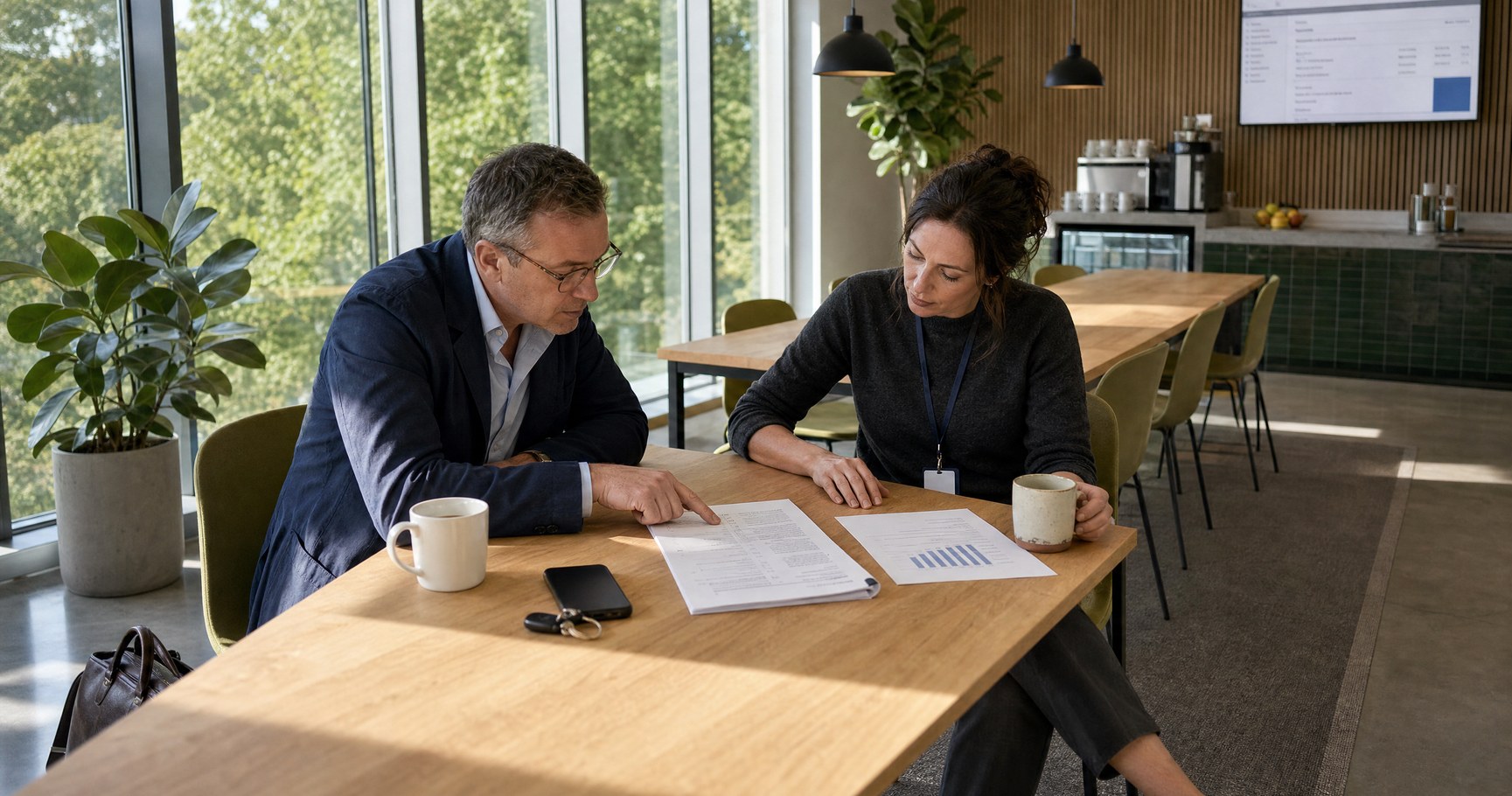
Don't take my word for it. Ask your sales manager and your marketing manager, separately, to describe your ideal customer and why you win. In 31 years I've yet to see the answers match at the first attempt.
None of them can answer the question you're actually asking, because the answer sits across all three and each of them can only see their own part of it.
What's missing is one person accountable for the whole route: who you target, what you charge, and whether the work comes back. Some firms call that a commercial director, though the title means different things in different trades, so it's the job that matters rather than the label. If you're paying for all three functions and still can't get a straight answer on what's driving revenue, adding a fourth won't fix it.
Where the money goes
I spend a fair amount of time around people with genuinely deep expertise. Researchers, engineers, technical founders. Some of the best applied work I've seen in years.
A good share of it never reaches a buyer.
Not because the work is weak, and not because the market doesn't want it. Because nobody in the room can translate what it does into what it's worth to somebody who'd pay for it. That translation is a distinct skill, and being brilliant at the underlying thing doesn't supply it. In some cases it makes it harder, because the closer you are to the detail the further you are from how it sounds to a buyer.
One of them works in AI itself. Their own field is the technology everyone assumes closes this gap, and they still needed someone else to make the commercial case for the work. If AI closed it, it would have closed it there first.
The gap is between a domain and a market, and it's crossed by a person who's fluent in both and trusted in both.
Four routes, in order
Four options, in the order I'd test them.
Fix the route before you hire anyone. A good number of stalled commercial functions don't have a people problem. They have no agreed definition of a good customer, three versions of the pricing, and reporting nobody trusts. A new director spends their first six months discovering this and their second six fixing it, at a director's salary. If that sounds familiar, the sequence is wrong.
Hire, if the job is permanent and you can attract the right person. A genuinely good commercial lead is worth every penny and there's no substitute. Be honest about whether a £5m to £30m business in your sector, in your location, can attract one, and about what happens if you get it wrong.
Use an agency for what agencies are good at. Production, reach, specialist channels. They're not good at owning your commercial function, and asking them to is how the relationship ends badly.
Or bring in someone senior for a fixed period to fix the route and hand it back. Which is what I do, so treat that as a declared interest rather than a neutral recommendation. The method is called Revenue ReSET, it's built on three pillars [mindset, skillset, toolset], and it's fixed-scope on purpose, because a commercial function you can't run without me isn't fixed. How I work sets out what that involves. For whether it works, £18.7m of new revenue at Renold, the engineering manufacturer, and other examples across logistics, recruitment and specialty materials.
Whoever you already have in-seat usually comes out of this better. A sales or marketing lead who finally has a defined target and a way to prove what's working is more effective, not less, and they've generally been asking for both for years.
What does change is what gets outsourced. When one person is accountable end to end, work that went out of the building because nobody had time for it tends to come back in, and that's often where the money was going. Worth knowing before you start rather than halfway through.
Questions I get asked
Can I put the hire off another year?
Often, yes, and sometimes that's the right call. The test isn't cost, it's whether anyone currently owns the commercial outcome end to end. If it's split across three people who each own part of it, the hire isn't the fix and delaying it changes nothing.
What's the real difference between a commercial director and a good sales manager?
Scope. A sales manager runs the selling, and runs it well when the target is clear. Someone at commercial-director level is accountable for the route around it: who you target, what you charge, and whether the work comes back. If the selling is inconsistent, you want the first. If a good quarter doesn't tell you how to get another one, you want the second.
I've already got a marketing manager and an agency. Where does this fit?
Above both, and it should make both jobs clearer rather than smaller. Your marketing manager gets a defined target and an agreed definition of a good lead, which is usually what they've been asking for. The agency gets a brief that isn't a guess, which is usually what they've been complaining about. What changes is that one person becomes accountable for whether the whole thing produces revenue, and can answer when you ask.
How do I tell whether it's the people or the system?
Run the test from earlier: two colleagues, separately, same two questions. Two different answers means it's the system. It's almost always the system.
Does using AI well mean I need fewer people?
Sometimes, and I'd rather be straight about that than not. What I see more often is the same team covering more ground with better information. But if you're weighing a hire against tooling, the honest answer is the tooling has genuinely moved, and the question is which parts of the job it moved.
The job still needs doing
Work out which of the four routes fits before you decide who to call. The order matters more than the choice, and it's the part most people skip.
AI made the doing cheaper and the judging more valuable. If nobody in the building owns that judgement, the cost of leaving it unowned goes up every year. That's the part 2026 genuinely changed.
Nik Stapleton, FCIM. Managing Director, Sapius Commercial Ltd.
Nik has spent 31 years in B2B commercial work, 22 of them running his own marketing agency, across more than 70 engagements. He is a Fellow of the Chartered Institute of Marketing and Managing Director of Sapius Commercial Ltd, company number 17046077. He works with UK B2B businesses in short, fixed-scope engagements, fixing the commercial function and handing it back. More at about Nik Stapleton and on LinkedIn.